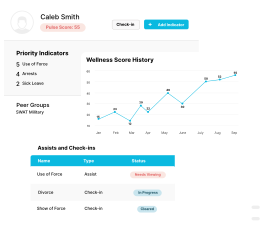
Traditional Early Intervention Alerts Don't Always Tell the Whole Story
Officer stress rarely comes from one event alone. Traditional early intervention systems can make it difficult to see the broader context.
Common challenges include:
- Alerts based on isolated thresholds rather than combinations of indicators
- Limited visibility into cumulative exposure to stressful incidents
- Important context buried in CAD narratives and disconnected systems
- Too many alerts that provide little meaningful context
- Inconsistent approaches to supervisor check-ins
- Difficulty documenting support and maintaining follow-through over time
Make Early Intervention More Informed and More Supportive
PowerVitals helps agencies move beyond threshold-based alerts by connecting relevant indicators, surfacing cumulative stress, and giving supervisors structured tools for check-ins and follow-up.
- Understand Cumulative Stress: Pulse Scores help quantify the impact of logged indicators over time so supervisors can better understand what an officer may be experiencing.
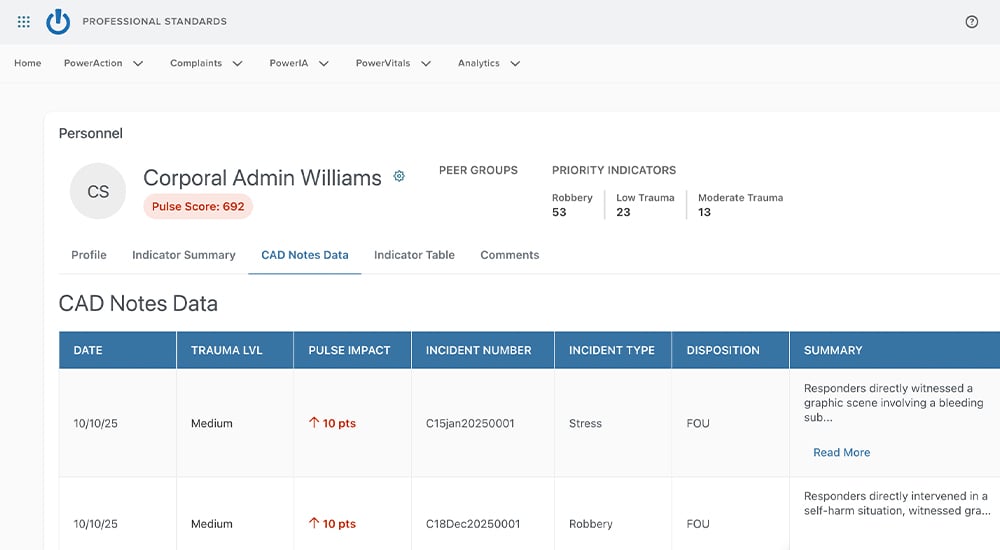
- Surface More Meaningful Context: CAD Notes Analyzer reviews CAD narratives for stress-related indicators that may not be captured through traditional event counts alone.
- Identify Patterns Earlier: Multi-factor alerts and sum total monitoring help agencies recognize meaningful combinations and accumulation of indicators.
- Support Human-Led Check-Ins: Supervisors can respond to alerts or initiate check-ins based on their own judgment, supported by agency-configured templates.
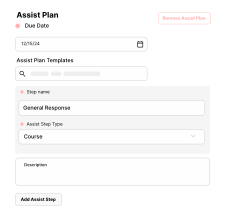
- Create Clear Follow-Through: Customizable assist plans organize tasks, courses, and next steps when additional support is appropriate.
From Meaningful Signals to Meaningful Support
PowerVitals gives administrators, supervisors, and officers a connected workflow for recognizing stress, checking in, documenting support, and following through.
- Capture Relevant Indicators: PowerVitals brings in information from configured data sources and turns relevant activity into indicators that can contribute to the early intervention picture.
- Surface Stress From CAD Narratives: CAD Notes Analyzer reviews narrative context from calls and identifies configured stress-related indicators that may contribute to an officer's cumulative exposure.
- Recognize Patterns and Accumulation: Pulse Scores, threshold alerts, multi-factor alerts, and sum total monitoring help agencies understand when individual indicators begin to form a broader pattern.
- Start or Document a Check-In: Supervisors can use recommended templates or initiate a check-in based on their own judgment.
- Create an Assist Plan: When additional support is appropriate, supervisors can assign agency-defined next steps including tasks, courses, or other follow-up.
- Maintain Continuity Over Time: Keep indicators, check-ins, and assist plans documented so supervisors can maintain visibility beyond the initial alert or conversation.
Key features of early intervention software
PowerVitals combines officer-level insight with structured tools that help agencies recognize cumulative stress, identify meaningful patterns, and respond consistently.

CAD Notes Analyzer
Use AI to review CAD narratives for configured stress-related indicators and bring that context into PowerVitals, helping agencies better understand cumulative exposure to difficult calls that may not be visible through traditional event counts alone.

Individual Pulse Scores
Quantify cumulative stress based on logged indicators to give supervisors additional context around the impact of events and activity over time.
Multi-Factor & Sum Total Monitoring
Identify when preset indicators occur in combination or accumulate to agency-defined totals, helping supervisors recognize patterns that may be more meaningful than a single threshold.
Dashboards & Officer Profiles
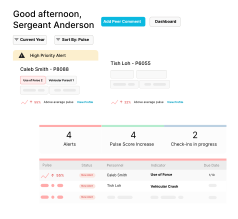
Turn early intervention data into clear, actionable information with dashboards and detailed profiles that keep indicators, alerts, and relevant history visible over time.
Check-In Templates & Manual Check-Ins
Configure check-in templates that can be recommended when certain alerts are present while still allowing supervisors to initiate and document conversations based on their own professional judgment.
Customizable Assist Plans
Create consistent follow-through with customizable steps for tasks, courses, and other agency-defined actions.
Custom Groupings
Create groups and compare officer information by unit, demographics, special assignment, or other agency-defined criteria.Wellness-Forward Early Intervention Across Your Agency
Give supervisors the information and tools they need to recognize stress, support their officers, and follow through consistently.
- Earlier Support: Recognize combinations of indicators that may warrant a supervisor check-in before concerns become more significant.
- Better Context: Help supervisors understand the cumulative impact of relevant events rather than evaluating each incident in isolation.
- More Meaningful Alerts: Focus attention on agency-defined combinations of indicators instead of generating unnecessary alerts.
- Consistent Supervisor Response: Use shared check-in templates and assist plans to create a more structured approach across teams and shifts.
- Clear Follow-Through: Turn a check-in into defined next steps rather than allowing the process to end when an alert is reviewed.
- Greater Agency Insight: Use dashboards, officer profiles, and custom groupings to better understand patterns across your organization.
Connect the Data That Supports Earlier Intervention
PowerVitals brings relevant data from across your agency into your early intervention process, helping supervisors recognize patterns across wellness, professional standards, scheduling, and training.
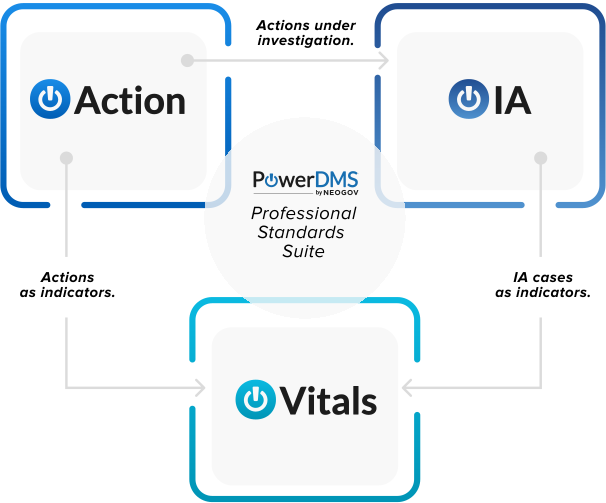
- Professional Standards Suite: PowerVitals works alongside PowerAction and PowerIA as part of a fully integrated Professional Standards Suite.
- PowerTime: Use overtime hours, time off, and unexpected callouts as PowerVitals indicators. Agencies can set thresholds over defined timeframes and use PowerTime data to trigger alerts when potentially concerning patterns emerge.
- PowerReady: Bring training alerts from PowerReady into PowerVitals as indicators. Agencies can incorporate signals such as phase extensions and NRT alerts into threshold alerts, multi-factor monitors, and Pulse Scores, giving supervisors added context around trainees and officers who may benefit from a check-in.
Read more about Vitals



Read more about PowerDMS PowerPolicy





Public Safety Software Solutions for Every Agency Need
Explore our complete public safety management system – software solutions and digital tools designed to replace paper processes, simplify compliance, and strengthen community trust.